
WINDOW OF TOLERANCE | yoga, mindfulness & meditation | emdr and the body | body mapping exercise Have you ever felt a sense of disconnection from your body? Perhaps you spend most of your day in your head, thinking, planning, anticipating the moments that have not happened yet, or the moments that have passed. This leaves very little time to pause and get curious about your present internal and external experiences.
For many of us, particularly those navigating chronic stress, anxiety or trauma, reconnecting with the body can feel unfamiliar or even unsafe. Yet developing a relationship of awareness with our present state experiences can be an important step towards developing an understanding of our physical, mental and emotional state of awareness.
Practices such as yoga, mindfulness, meditation, and EMDR therapy can offer different pathways toward strengthening the mind-body connection.
How Does Trauma Affect Your Connection to Your Body?
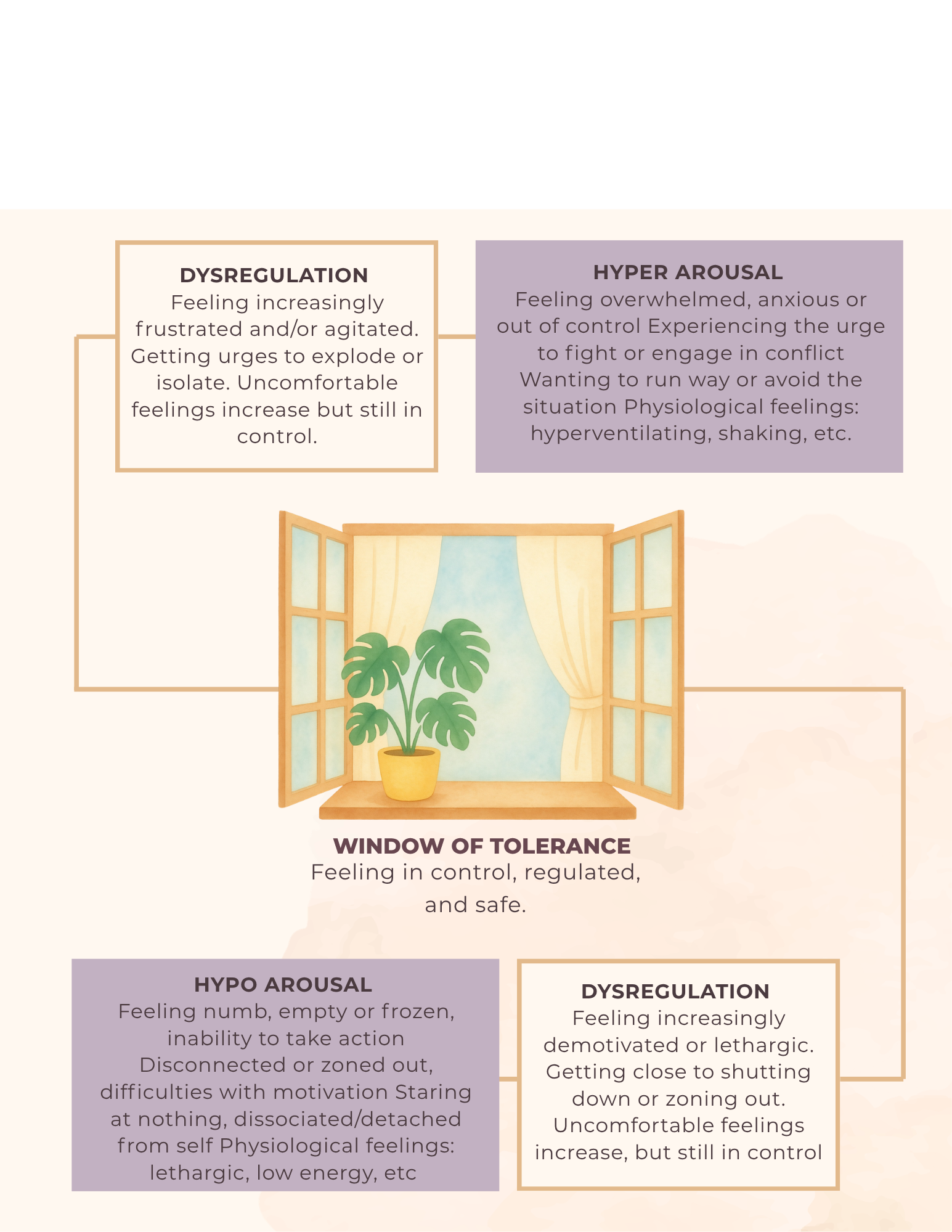
THE WINDOW OF TOLERANCE
Our experiences shape how our bodies register stress and safety or lack of safety.
The window of tolerance shows us how our nervous system registers trauma, how it can influence our emotional state, as well as how we then interact with our environment.
Sometimes, we become highly alert to our surroundings, triggering dysregulation and a state of hyperarousal or hypervigilance.
At other times, we may trigger a sense of hypoarousal, disconnection from physical sensations, or finding ourselves feeling numb and operating on autopilot.
For Black and Racialized women, this relationship can also be shaped by experiences of racism, discrimination, cultural expectations and the pressure to remain strong while navigating multiple responsibilities. The expectation to prioritize others or push through difficult experiences can make it harder to recognize and respond to our own needs.
Reconnecting with your body is not about forcing yourself to feel something or finding an explanation for every sensation. It is about gradually developing curiosity, awareness and choice in how you relate to your experiences.
How Can Yoga, Mindfulness and Meditation Support Body Awareness ?
Yoga and mindfulness are tools that can help us develop greater awareness of what is happening in our mind and body in the present moment. There are many different types of meditation practices that each have their own purpose and point of focus. Some forms of meditation include:
Breath awareness meditationLoving kindness meditationwalking meditationcalm place meditation
Asana, or yoga as commonly known by Western practitioners can be a helpful bridge to connecting breath awareness, mindfulness and the body. Asana invites us to notice the physical state of our body, areas of tension and other sensations that may be giving us more information about our current state and what we are holding.
Mindfulness and meditation offer opportunities to observe thoughts, emotions and bodily sensations without immediately judging or reacting to them. Even briefly noticing the feeling of your feet on the floor or the movement of your breath can create an opportunity to reconnect with the present.
These practices are not about achieving a particular state of calm. They are ways of becoming more familiar with your internal experiences, while respecting your own boundaries and pace.
How Does EMDR Support the Mind-Body Connection?
Eye Movement Desensitization and Reprocessing (EMDR) is a structured psychotherapy approach that helps people process distressing memories and experiences.
Trauma can be experienced not only through thoughts and emotions, but also through physical responses. An image or a memory may bring up tension, discomfort, changes in breathing or other sensations, even when we are not consciously thinking about the original experience.
EMDR therapy incorporates attention to these responses as part of the eight phase protocol. With appropriate preparation, resourcing and support, clients work toward processing distressing experiences and developing more adaptive ways of understanding themselves and their experiences.
While yoga, mindfulness and meditation are all possible resources to incorporate into EMDR, they are mainly tools that help to manage the distress of the thought or memory. Each approach offers something different, and the right combination depends on an individual's needs and preferences.
A Mindful Body-Mapping Exercise
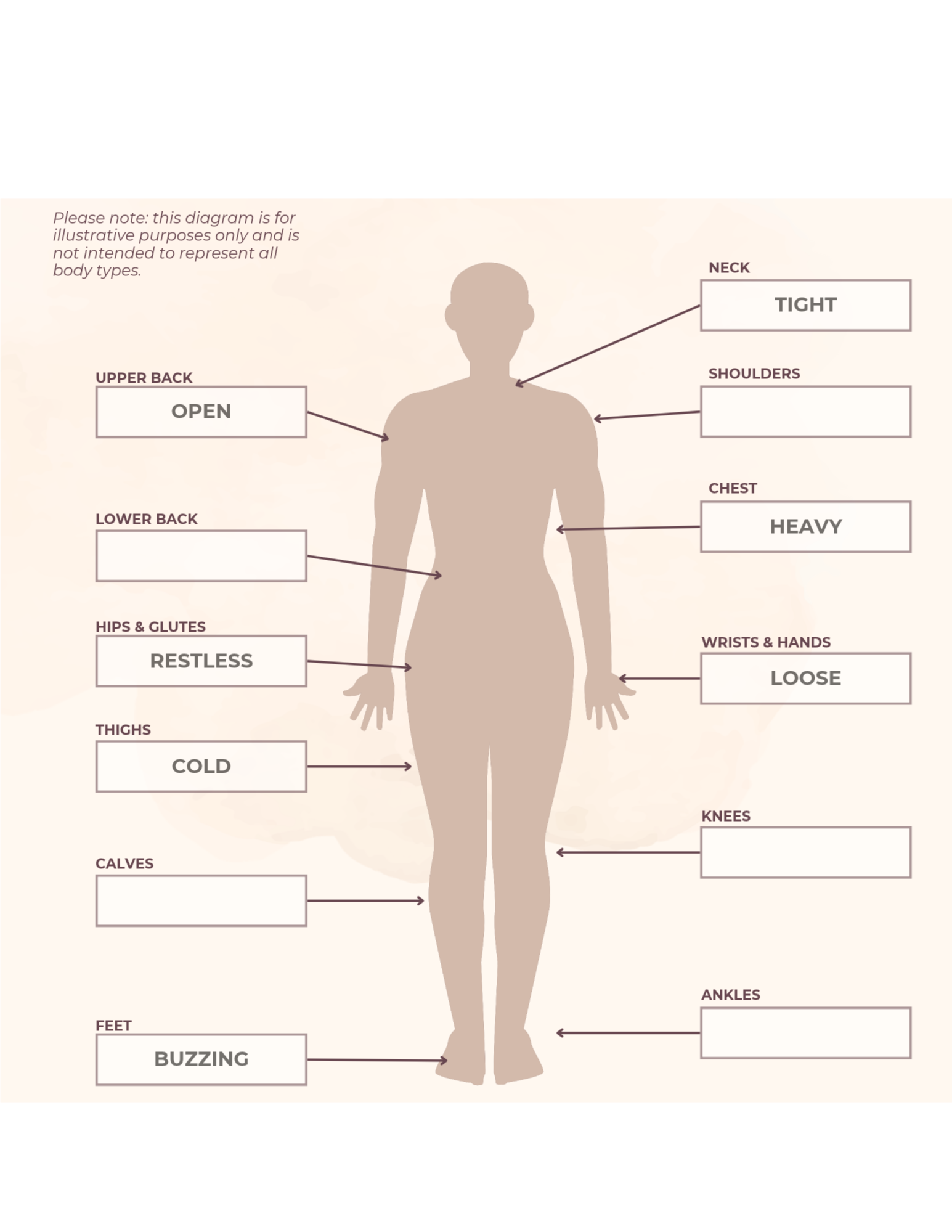
Body mapping is a simple way to explore your physical and emotional experiences with curiosity. Rather than trying to change what you feel, the intention is to notice and become more familiar with your body's signals. Try it in these steps:
1.Connect with the present
Take a moment to notice your surroundings. Feel the support beneath you and observe what is happening around you.
2.Notice your body.
Gently bring your attention from your head down toward your feet. What do you notice? Perhaps tension, warmth, coolness, tingling, heaviness, ease or numbness. You may not notice much at all, and that is okay.
3.Explore your sensations.
Consider whether any sensations feel connected to an emotion or experience. Where do you notice them? What might they be communicating? You do not need to find an answer or make sense of everything.
4.Map your experience.
If helpful, draw a simple outline of a body and mark where you notice different sensations or emotions. You can use colours, words or symbols to represent your experience. You can use the example on the right to guide you.
Remember, there is no right or wrong way to do this exercise. If focusing inward feels uncomfortable, you can open your eyes, orient to your surroundings or stop altogether. Your sense of choice and safety matters.
For more guided reflection, explore the free Nervous System Check-In & Reset Workbook from Sit With It.
Continuing Your Journey
Reconnecting with your body is an ongoing process. It can begin with small moments of noticing: recognizing tension in your shoulders, paying attention to your breath or becoming curious about an emotion rather than immediately pushing it aside.
Through approaches such as mindfulness, yoga, meditation and trauma-informed psychotherapy, we can begin to build a more intentional relationship with ourselves.
At Black Lotus Mental Wellness, we integrate trauma-informed therapy, EMDR and mind-body practices to support Black and racialized women in navigating anxiety, trauma and the impact of chronic stress.
You can also join Sit With It, our free monthly virtual Nervous System Reset, created as a space to pause, reconnect and explore guided practices for your well-being.